Contents:
- The Most Common Causes of Roses with Holes in Leaves
- Japanese Beetles and Other Chewing Insects
- Leafcutter Bees: The Culprit Gardeners Often Defend
- Aphids, Thrips, and the Holes They Don’t Actually Make
- Disease and Environmental Causes of Holes in Rose Leaves
- Rose Slug Damage vs. Black Spot: Reading the Signs
- Spray Burn and Chemical Damage
- A Seasonal Timeline: When to Watch for What
- Practical Treatment and Prevention Tips
- Frequently Asked Questions About Roses with Holes in Leaves
- What is eating holes in my rose leaves at night?
- Are holes in rose leaves harmful to the plant?
- How do I tell the difference between insect damage and disease on rose leaves?
- Can I use neem oil to treat holes in rose leaves?
- Why do my roses have round holes cut from the edges of the leaves?
- Getting Ahead of the Problem Next Season
You walk out to your garden on a quiet Saturday morning, coffee in hand, and something stops you cold. Your prize climbing rose — the one you’ve been nurturing since last spring — looks like it’s been used for target practice. Tiny punctures, ragged edges, some leaves reduced to lacework. The blooms are still gorgeous, but something has been eating your plant alive, probably while you slept.
Holes in rose leaves are one of the most common complaints among hobbyist gardeners, and the frustration is real. But the damage itself is just a symptom. Identifying the actual cause — and there are several distinct possibilities — is what determines whether you reach for neem oil, a pair of tweezers, or nothing at all.
This guide breaks down every major reason your roses have holes in leaves, from the most likely culprits to the ones most gardeners overlook entirely.
The Most Common Causes of Roses with Holes in Leaves
Rose foliage damage falls into three broad categories: insect feeding, fungal or bacterial disease, and mechanical or environmental stress. Each leaves a different signature, and learning to read those clues saves you from treating the wrong problem.
Japanese Beetles and Other Chewing Insects
Japanese beetles (Popillia japonica) are the single most destructive rose pest in the eastern United States, active from late June through August. They skeletonize leaves by eating the tissue between the veins, leaving behind a translucent, net-like remnant. A moderate infestation can strip a bush in under a week.
Other chewing insects to suspect include:
- Rose chafers — similar feeding pattern to Japanese beetles, most active in June
- Fuller rose beetles — adults notch leaf edges in a scalloped pattern, common in the West and South
- Caterpillars — leave large, irregular holes and sometimes visible frass (droppings) on or below leaves
- Rose slugs (Endelomyia aethiops) — technically sawfly larvae, not slugs; they rasp the surface of leaves, creating windowpane-like patches that eventually fall out
Hand-picking Japanese beetles in the early morning — when they’re sluggish from cooler temperatures — is surprisingly effective for small gardens. For larger infestations, pyrethrin-based sprays applied every 7 days during peak beetle season (July in USDA Zones 5–7) provide good knockdown without long residual toxicity.
Leafcutter Bees: The Culprit Gardeners Often Defend
Here’s where things get interesting. If you’re seeing perfect semicircular or circular cutouts from leaf edges — clean, precise, like someone used a hole punch — you’re not dealing with a pest in the destructive sense. Leafcutter bees (Megachile spp.) are solitary, native pollinators that cut rose leaf sections to line their nesting cells. They do not eat the leaves; they carry the pieces away.
The damage is aesthetic, rarely exceeds 10–15% of leaf area, and the bees themselves are valuable pollinators. Most horticulturists recommend leaving them alone. Dr. Priya Mehta, an entomologist and Master Rosarian with the American Rose Society, puts it plainly: “Leafcutter bee damage looks alarming but is almost never worth treating. The pollination benefit to your garden far outweighs a few tidy notches in the foliage.”
Aphids, Thrips, and the Holes They Don’t Actually Make
Aphids and thrips don’t chew holes — they pierce and suck. But their feeding causes cells to collapse and die, which can result in distorted leaves with brown or translucent patches that eventually tear and look like holes. Check the undersides of leaves for clusters of soft-bodied insects (aphids) or use a white piece of paper to tap a leaf against — thrips will fall onto the paper as tiny, fast-moving specks.
A strong jet of water from a garden hose removes 80–90% of aphid populations on contact. Repeat daily for five days for best results. For thrips, spinosad-based insecticides are highly effective and have low mammalian toxicity.
Disease and Environmental Causes of Holes in Rose Leaves
Rose Slug Damage vs. Black Spot: Reading the Signs
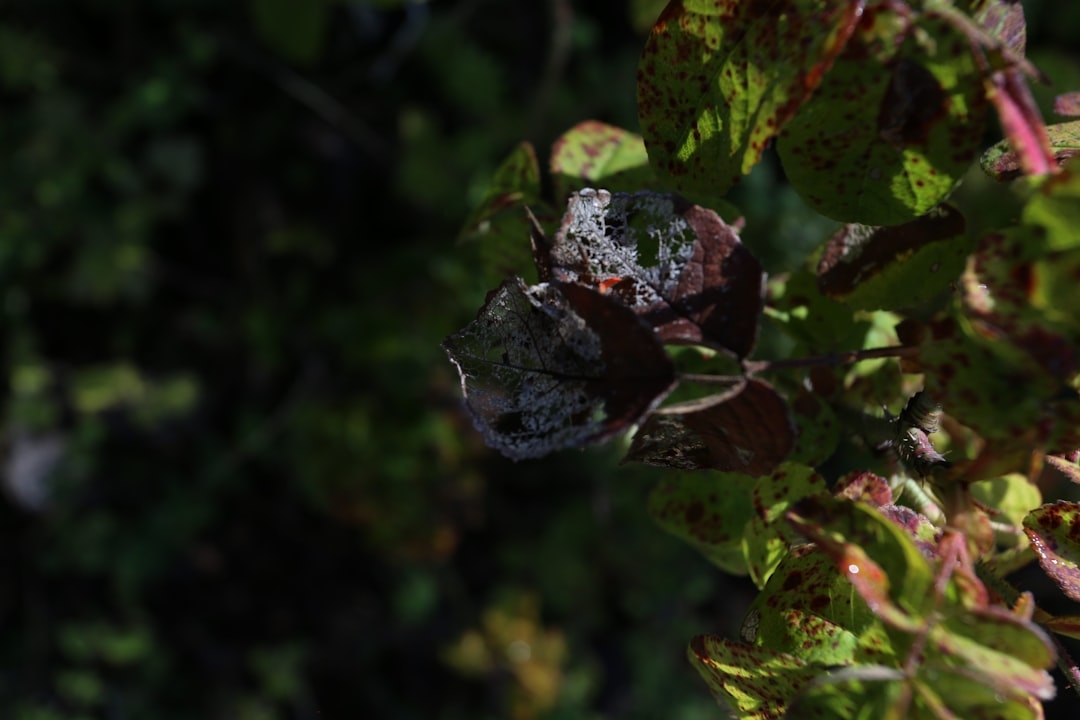
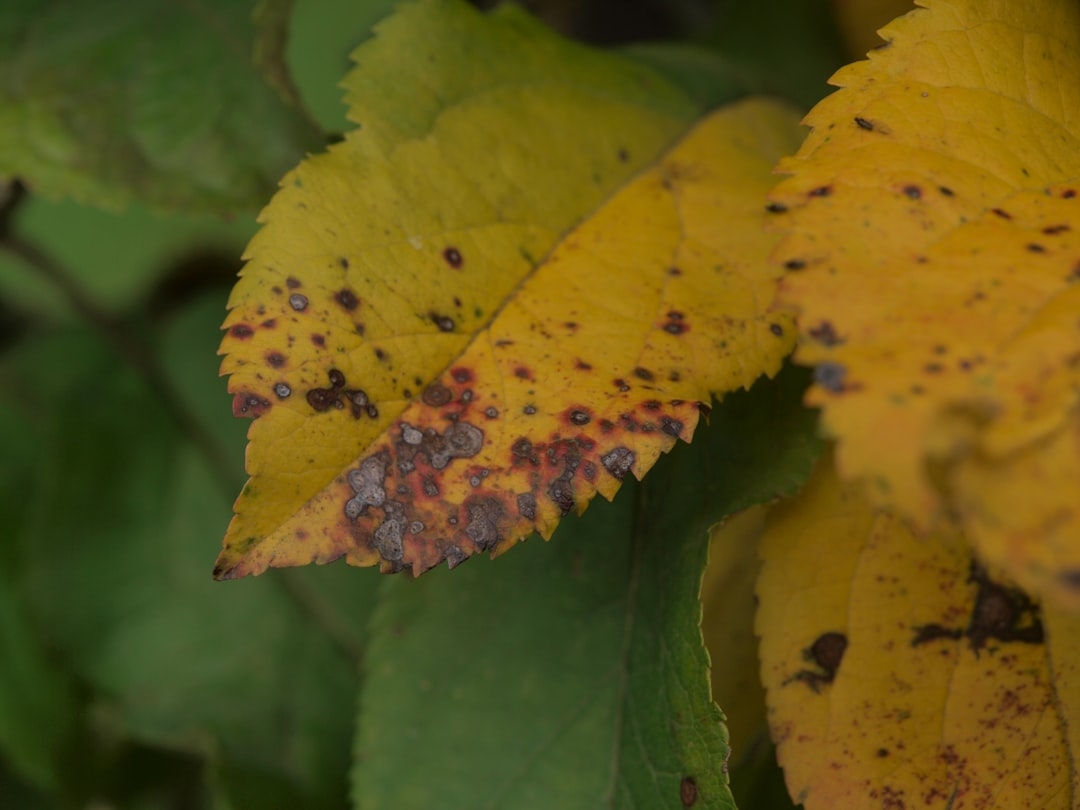
Black spot (Diplocarpon rosae) is the most widespread rose disease in North America. It doesn’t create holes directly, but infected tissue turns yellow and black, then drops out — leaving what looks like scattered perforations across the leaf surface. If your “holes” are surrounded by yellowing tissue or have dark margins, fungal disease is likely the cause, not insects.
Black spot thrives when leaves stay wet for more than seven hours. Watering at the base of the plant in the morning, rather than overhead in the evening, is the single most effective cultural control. Chlorothalonil fungicide applied every 7–14 days during humid stretches (particularly May through September in most US regions) keeps it suppressed.
Spray Burn and Chemical Damage
Overly concentrated pesticide or fertilizer solutions — especially those applied during midday heat above 85°F — can cause contact burns that dry out and fall away, leaving irregular holes. This is a mechanical cause, not biological. Always apply sprays early morning or evening, and follow label dilution rates exactly. Even organic options like neem oil can burn foliage if applied at the wrong time or concentration.
A Seasonal Timeline: When to Watch for What
Timing is one of the most useful diagnostic tools available to a gardener. Different problems peak at different times of year:
- March–May: Rose slugs are most active; watch for windowed, papery patches on young foliage
- May–June: Rose chafers emerge; look for scalloped leaf edges, particularly in sandy-soil regions
- June–August: Japanese beetle peak season in the Northeast and Midwest; skeletonized leaves are the hallmark
- June–September: Leafcutter bee activity; clean semicircular cuts from leaf margins
- Year-round (warm climates), Spring–Fall (cooler zones): Aphids, thrips, black spot — monitor continuously
Keep a simple garden journal with dates and photos. After two seasons, patterns emerge that make diagnosis almost intuitive.
Practical Treatment and Prevention Tips
A reader named Carolyn from Columbus, Ohio, shared a story that resonates with many rose growers. She’d been battling what she thought were Japanese beetles for two summers, spraying on a weekly schedule, seeing minimal improvement. When she finally sent a photo to her local cooperative extension office, they identified the culprit as rose sawfly larvae — a completely different organism, unaffected by the beetle traps she’d been using. One application of spinosad solved a two-year problem.
The lesson: always confirm your diagnosis before treating. Most state cooperative extension services offer free or low-cost plant diagnostic clinics, and many accept emailed photos.
General best practices for healthy rose foliage:
- Inspect the undersides of leaves weekly during the growing season — most pests start there
- Remove and bag (don’t compost) heavily infested or diseased foliage to prevent spread
- Mulch around the base with 2–3 inches of organic material to reduce fungal spore splash from soil
- Space plants to allow air circulation — at minimum 3 feet between hybrid tea roses
- Choose disease-resistant varieties like ‘Knock Out,’ ‘Carefree Beauty,’ or ‘Earth Song’ if repeated problems persist
Frequently Asked Questions About Roses with Holes in Leaves
What is eating holes in my rose leaves at night?
Nocturnal feeders on roses include caterpillars, earwigs, and occasionally slugs (actual mollusks, not rose slugs). Check leaves and the soil around the base of the plant after dark with a flashlight. Caterpillars often rest on stems or the undersides of leaves during the day.
Are holes in rose leaves harmful to the plant?
Moderate leaf damage — less than 25–30% of total leaf area — rarely causes lasting harm to an established rose. Severe or repeated defoliation, especially early in the season, weakens the plant and reduces bloom production. Persistent damage warrants treatment.
How do I tell the difference between insect damage and disease on rose leaves?
Insect damage typically produces clean or ragged holes with no discoloration of surrounding tissue. Disease-related holes are usually accompanied by yellowing, browning, or dark-edged lesions around the damaged area. Fungal and bacterial issues also often affect multiple leaves uniformly rather than randomly.
Can I use neem oil to treat holes in rose leaves?
Neem oil is effective against soft-bodied insects like aphids, thrips, and young rose slug larvae. It has limited effectiveness against hard-shelled beetles like Japanese beetles or rose chafers. Always apply in the evening or early morning to avoid phototoxic burning, and never when temperatures exceed 90°F.
Why do my roses have round holes cut from the edges of the leaves?
Clean, semicircular cuts along leaf edges are the signature of leafcutter bees. These are native, beneficial pollinators and do not harm the plant. No treatment is recommended or necessary.
Getting Ahead of the Problem Next Season
The most effective rose care happens before the damage appears. In late winter — before new growth breaks dormancy — apply a dormant horticultural oil spray to smother overwintering insect eggs and fungal spores on canes and bud unions. Come April, begin weekly inspections. By the time you see your first Japanese beetle or rose slug, you’ll know exactly what you’re looking at and exactly what to do next.
Your roses aren’t fragile. With a little systematic attention, they’re remarkably resilient — and the foliage can be just as beautiful as the blooms.