Contents:
- Why Roses Droop So Quickly After Cutting
- The Roses Drooping Next Day Fix That Actually Works
- Step 1: Re-Cut the Stems Underwater
- Step 2: Use Warm Water in the Vase
- Step 3: Strip Every Leaf Below the Waterline
- Step 4: Move Them Somewhere Cool
- Regional Factors That Affect How Fast Roses Droop
- Garden Roses vs. Grocery Store Roses: Different Problems, Same Symptom
- Practical Budget Tips for Longer-Lasting Roses
- Frequently Asked Questions
- Why are my roses drooping the next day after buying them?
- Can I revive a completely wilted rose?
- How long should roses last in a vase?
- Does aspirin help keep roses fresh?
- Why do my outdoor garden roses droop in summer?
- Keep Going — Your Roses Are Worth It
You brought home the most beautiful bouquet, or your garden roses finally bloomed — and by the next morning, they’re hanging their heads like they lost a bet. Frustrating doesn’t even cover it. Roses drooping the next day is one of the most common complaints from new rose growers and flower arrangers alike, and the good news is that it’s almost always fixable. Better yet, most of the solutions cost nothing or next to nothing.
Let’s get your roses standing tall again.
Why Roses Droop So Quickly After Cutting
Roses are drama queens with a legitimate excuse. The moment a stem is cut, it begins losing its ability to draw up water efficiently. Air bubbles enter the cut end and block the vascular tissue — the same system that keeps the bloom plump and upright. Within a few hours, if that blockage isn’t addressed, even a healthy rose will wilt.
This process, called air embolism, happens faster than most people expect. Research on cut flower longevity shows that roses left out of water for as little as 30 minutes after cutting can lose up to 60% of their vase life. That’s not a small margin for error.
There are several reasons your roses might be drooping by the next day, and they don’t all have the same fix:
- Air bubble in the stem — the most common culprit
- Bacterial buildup in the vase water — clouds the water and clogs stems within 24 hours
- Dehydration during transport — especially common with grocery store or shipped roses
- Heat exposure — even one hour in a warm car or sunny spot can accelerate drooping
- Ethylene gas exposure — from nearby fruit, cigarette smoke, or car exhaust
The Roses Drooping Next Day Fix That Actually Works
Before you toss anything, try the re-cut method. It works about 80% of the time if you catch the droop within 24 hours.
Step 1: Re-Cut the Stems Underwater
Fill a sink or large bowl with lukewarm water — not cold, not hot, around 100–110°F. Submerge the bottom few inches of the stems and use sharp scissors or pruning shears to cut about 1–2 inches off at a 45-degree angle. That diagonal cut increases the surface area for water uptake. Keep the stems submerged for 30 seconds after cutting before moving them to the vase.
Step 2: Use Warm Water in the Vase
Cold water moves up stems more slowly. Fill your clean vase with warm water (around 100°F) and add a flower preservative packet if you have one. No packet? A DIY version works surprisingly well: 1 tablespoon of sugar, 1 tablespoon of white vinegar, and a drop of bleach per quart of water. The sugar feeds the bloom, the vinegar lowers pH for better water uptake, and the bleach keeps bacteria at bay.
Step 3: Strip Every Leaf Below the Waterline
Any foliage sitting in the vase water will rot within 24–48 hours and flood the water with bacteria. Remove every leaf that would be submerged. This single step dramatically extends vase life.
Step 4: Move Them Somewhere Cool
Place the vase away from direct sunlight, heating vents, and fruit bowls. A spot around 65°F is ideal. If you have space, putting the arrangement in the refrigerator overnight (away from fruit) can completely revive a droopy rose by morning.
🌹 What the Pros Know: Professional florists re-cut stems and place roses in a cold cooler (around 34–38°F) for at least two hours before arranging them. This practice — called “hardening” or “conditioning” — allows the flowers to fully hydrate before they’re displayed. You can replicate this at home by placing your re-cut roses in a bucket of cool water in the refrigerator for 2–4 hours. The difference in stem strength is remarkable.
Regional Factors That Affect How Fast Roses Droop
Where you live genuinely affects how your roses behave. In the Northeast and Midwest, low winter humidity combined with dry indoor heat is a serious enemy — central heating pulls moisture from blooms fast, so vases near radiators will lose roses in under 24 hours. If you’re in the South, the opposite problem applies outdoors: heat and humidity encourage bacterial growth in vase water almost twice as fast as in cooler climates, so you’ll need to change the water every day rather than every other day. On the West Coast, especially in California, outdoor garden roses often droop due to midday heat stress — cut them in the early morning before 9 a.m. when the plant is most hydrated, and they’ll hold their shape dramatically longer.
Garden Roses vs. Grocery Store Roses: Different Problems, Same Symptom
It’s easy to assume drooping roses all have the same cause, but garden-cut roses and store-bought roses droop for different reasons — and that distinction matters for how you fix them.
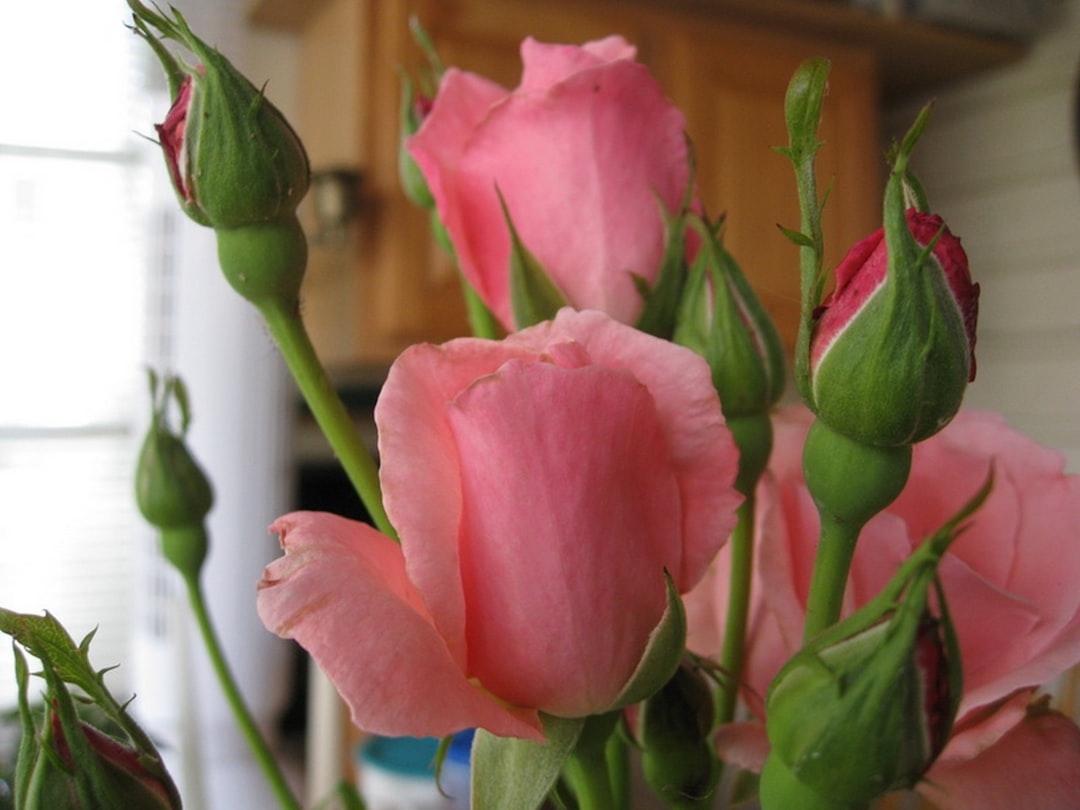
Garden roses droop mainly because of improper cutting technique or timing. They’re usually freshly cut and healthy; they just need the re-cut and warm water treatment described above.
Grocery store roses have typically traveled 3–5 days from South American farms (Colombia and Ecuador supply roughly 80% of US-sold roses) before hitting the shelf. By the time you bring them home, they may already be in bacterial decline. These need an immediate re-cut, fresh water, and a preservative. Even then, their lifespan is shorter than garden roses — expect 5–7 days max rather than 10–14.
This is the key difference people miss: a grocery store rose drooping the next day often isn’t something you did wrong — it’s something that happened before you ever bought it.
Practical Budget Tips for Longer-Lasting Roses
- Buy a clean vase: Residue from previous arrangements is loaded with bacteria. A quick rinse with a tablespoon of bleach in hot water before use makes a real difference.
- Skip the fancy flower food packets: The DIY recipe above (sugar + vinegar + bleach) costs pennies and performs just as well in independent tests.
- Choose mid-week grocery runs: Stores restock flowers on Tuesdays and Wednesdays. Buying then gets you fresher stock than weekend shopping.
- Look at the guard petals: Those outer petals that look a little rough? They’re protective, not damaged. Don’t strip them — they help the bloom last longer.
- Change vase water every 2 days: This alone can add 3–4 days to the life of a bouquet.
Frequently Asked Questions
Why are my roses drooping the next day after buying them?
Most likely, air has entered the stem ends and is blocking water uptake. Re-cut the stems at a 45-degree angle underwater, place them in fresh warm water with a preservative, and move them somewhere cool. This usually revives drooping roses within 2–4 hours.
Can I revive a completely wilted rose?
Yes, in many cases. Submerge the entire stem (and even the bloom) in a sink full of cool water for 30 minutes. Then re-cut the stem and place in fresh warm water. Roses in early-stage wilting respond well to this method; roses that have been wilted for more than 48 hours are harder to save.
How long should roses last in a vase?
Fresh garden roses typically last 10–14 days with proper care. Store-bought roses last 5–7 days. Both timelines assume clean water changed every 2 days, no direct sun or heat exposure, and stems re-cut every 2–3 days.
Does aspirin help keep roses fresh?
Aspirin is a mild acid that can lower water pH slightly, which may help water absorption. However, the effect is minimal compared to a proper flower preservative or the sugar-vinegar-bleach recipe. It won’t hurt, but it’s not the silver bullet it’s often claimed to be.
Why do my outdoor garden roses droop in summer?
Heat and water stress. Roses need about 1 inch of water per week. In temperatures above 85°F, that requirement increases significantly. Drooping during midday heat is often temporary — plants conserve water by wilting slightly. If roses are still drooping in the early morning, the root zone is genuinely dry and needs a deep watering.
Keep Going — Your Roses Are Worth It
The difference between a bouquet that lasts two days and one that’s still gorgeous on day ten usually comes down to a handful of small habits: a clean vase, a fresh cut, cool conditions, and clean water. None of this requires expensive products or specialist tools. Once you’ve done it a couple of times, it takes less than five minutes.
If your garden roses are the ones giving you trouble, consider tracking when you cut them and what the temperature was. You’ll start to notice patterns specific to your yard and climate — and that knowledge is worth more than any product on the shelf. Your roses want to thrive. They just need a little help from you to get there.