Contents:
- Why Tulips Behave Differently from Other Cut Flowers
- The Main Reasons Your Tulips Are Bending in the Vase
- Phototropism: They’re Chasing the Light
- Warm Water and Room Temperature Stress
- Improper Stem Cutting
- Low Water Level in the Vase
- Bacterial Buildup
- Tulips vs. Daffodils: A Common Vase Companion Mistake
- Practical Fixes: How to Revive Drooping Tulips Right Now
- The Cold Water Wrap Method
- The Penny Trick — Myth vs. Reality
- Poke a Small Hole Under the Flower Head
- Choosing the Right Vase to Prevent Bending
- FAQ: Tulips Bending in a Vase
- Why do tulips droop so fast compared to other flowers?
- Does putting a coin in a vase actually keep tulips straight?
- How often should I change the water for tulips?
- Can I revive tulips that have completely drooped over?
- Why are my tulips bending toward the window?
- Getting the Most from Your Tulip Vase Life
Tulips bending in a vase is one of the most common frustrations flower lovers face — and it has been puzzling people for centuries. In 17th-century Holland, during the height of Tulip Mania, Dutch merchants paid the equivalent of a skilled craftsman’s annual salary for a single prized bulb. These weren’t just flowers; they were status symbols, displayed with obsessive care in homes across Amsterdam. Even then, florists struggled with the same drooping stems that drive modern gardeners crazy. The drama of a wilting tulip vase arrangement is timeless. But the fix? Completely within your reach.
Why Tulips Behave Differently from Other Cut Flowers
Most cut flowers stop growing the moment they’re snipped. Tulips don’t. Unlike roses or lilies, tulips are phototropic and geotropic — they continue to grow after cutting, sometimes adding up to an inch in length inside the vase. This ongoing growth is the root cause of nearly every drooping tulip situation you’ll encounter.
Their stems are also hollow, which makes them uniquely sensitive to water uptake. A slight blockage at the stem base — from a diagonal cut gone wrong, bacterial buildup, or even an air bubble — can cause the entire stem to go limp within hours. A rose has a more fibrous, dense stem that compensates for minor blockages. A tulip does not forgive.
According to Maya Hendricks, Certified Floral Designer and owner of Petal & Root Studio in Portland, Oregon: “People treat tulips like they treat roses, and that’s the first mistake. Tulips are living things that are still reaching for light and growing even in the vase. You need to work with that biology, not against it.”
The Main Reasons Your Tulips Are Bending in the Vase
1. Phototropism: They’re Chasing the Light
Tulips are extraordinarily light-sensitive. Place a vase of tulips near a sunny window, and within 6 to 12 hours, you’ll notice the stems arching dramatically toward the glass. This is phototropism — the plant’s cells on the shaded side elongate faster than those on the light side, causing the characteristic curve. It’s not a sign of poor health; it’s a sign of a very healthy, very determined plant.
The fix is straightforward: rotate your vase 180 degrees every 12 hours, or keep tulips in a spot with consistent, diffuse light rather than direct sunlight from one direction. A north-facing windowsill or the center of a well-lit room works better than a south-facing sill.
2. Warm Water and Room Temperature Stress
Tulips are cold-weather flowers. They originate from mountainous regions of Central Asia and are accustomed to near-freezing conditions during bloom. When placed in warm water or a warm room, their stems soften faster than they can absorb moisture. Keep your vase water between 35°F and 50°F, and store arrangements in a room no warmer than 65°F when possible. Even placing the vase near a heat vent can accelerate drooping by 30 to 40 percent compared to a cooler spot.
3. Improper Stem Cutting
A straight cut seals off the bottom of the stem almost immediately. Always cut tulip stems at a 45-degree angle — this increases the surface area available for water absorption and prevents the stem from sitting flat against the bottom of the vase, which would block uptake entirely. Re-cut stems every two days, removing about half an inch each time.
4. Low Water Level in the Vase
Unlike many flowers that prefer deep water, tulips actually do well with just 3 to 4 inches of water in the vase. However, they are extremely sensitive to running low. Because they’re still growing, they drink more than most cut flowers — up to 20% more water per day than roses of similar stem length. Check and refill your vase daily.
5. Bacterial Buildup
Bacteria multiply quickly in flower water, especially at room temperature. These microorganisms clog the tiny vascular channels in the tulip stem, preventing water from reaching the flower head. This is often the reason a tulip that looked perfect yesterday is drooping today. Change the water completely every two days and clean the vase with a drop of dish soap and a rinse of white vinegar between changes.
Tulips vs. Daffodils: A Common Vase Companion Mistake
Many DIY arrangers naturally pair tulips and daffodils together — both are spring flowers, they bloom around the same time, and they look stunning in combination. But this is one of the most common mistakes that causes tulips to droop prematurely.
Daffodils (narcissus) release a sap called narcissus latex into the water. This sap is toxic to tulips and actively blocks their vascular system, speeding up drooping and shortening vase life by as much as 50%. If you want to combine them, condition daffodils separately in their own water for 24 hours first — once the sap has leached out and the water has been changed, they can safely share a vase with tulips. Never skip this step.
Practical Fixes: How to Revive Drooping Tulips Right Now
The Cold Water Wrap Method
This is the most effective revival technique for severely drooping tulips. Wrap the entire bunch tightly in newspaper or kraft paper, forming a cone around the stems and flowers. Submerge the wrapped bouquet up to the flower heads in a bucket of cold water (around 40°F) for 2 to 3 hours. The paper keeps the stems upright and straight while the cold water rehydrates the entire stem. After soaking, re-cut the stems and place in a clean vase with fresh cold water. Most tulips recover significantly within 30 minutes of being transferred.
The Penny Trick — Myth vs. Reality
You’ve probably heard that dropping a copper penny into your tulip vase keeps them upright longer. There’s a kernel of truth here: copper does have mild antimicrobial properties that can slow bacterial growth. However, modern US pennies minted after 1982 are only 2.5% copper — not nearly enough to make a measurable difference. A proper floral preservative packet (the kind that comes with store-bought bouquets) contains the right balance of citric acid, sugar, and biocide, and is far more effective. Use one packet per vase; or mix your own with 1 teaspoon of sugar, 1 teaspoon of white vinegar, and ½ teaspoon of bleach per quart of water.
Poke a Small Hole Under the Flower Head
This is a trick professional florists use that almost no one at home knows about. Using a straight pin or thin needle, poke a tiny hole through the stem just below the flower head — about a quarter inch down. This releases trapped air bubbles inside the hollow stem, which are a common cause of sudden drooping. It sounds almost too simple, but it works remarkably well on tulips that go limp despite good water and cool temperatures.
Choosing the Right Vase to Prevent Bending
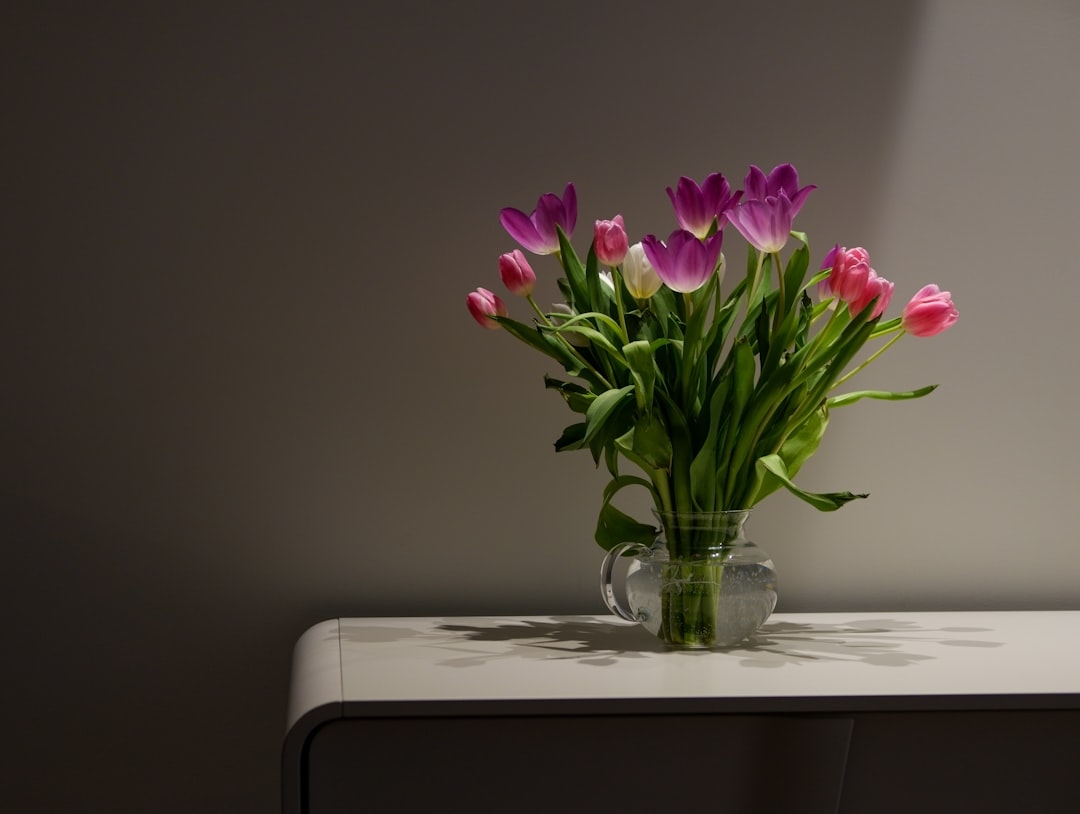
Vase shape matters more than most people realize. A tall, narrow vase with a small opening provides physical support for tulip stems and prevents them from fanning outward as they grow. Aim for a vase at least two-thirds the height of your tulip stems — so if your stems are 18 inches long, use a vase at least 12 inches tall. Wide-mouthed vases are beautiful but give tulips too much room to droop sideways without support.
If you love wide arrangements, use a piece of clear tape in a grid pattern across the mouth of the vase to create individual pockets for each stem. This holds them upright while remaining nearly invisible in photos.
FAQ: Tulips Bending in a Vase
Why do tulips droop so fast compared to other flowers?
Tulips continue growing after they’re cut, which causes them to bend toward light and soften faster than flowers that stop growing post-harvest. Their hollow stems also make them more vulnerable to water blockages from bacteria or air bubbles.
Does putting a coin in a vase actually keep tulips straight?
Modern pennies contain only 2.5% copper and offer minimal antimicrobial benefit. Floral preservative packets are far more effective. If you want a natural alternative, use 1 teaspoon each of white vinegar and sugar with a small drop of bleach per quart of water.
How often should I change the water for tulips?
Change vase water every two days and refill daily to account for the tulips’ high water intake. Re-cut stems at a 45-degree angle each time you change the water.
Can I revive tulips that have completely drooped over?
Yes. Wrap the bouquet tightly in newspaper, submerge it up to the flower heads in cold (40°F) water for 2 to 3 hours, then re-cut the stems and place in fresh cold water. Most tulips recover within an hour if the stem hasn’t been damaged.
Why are my tulips bending toward the window?
Tulips are phototropic — they grow toward light sources. Rotate your vase 180 degrees every 12 hours, or move it to a location with consistent, indirect light to prevent uneven bending.
Getting the Most from Your Tulip Vase Life
A fresh, properly cared-for tulip should last 7 to 10 days in the vase. With the cold water trick, daily water checks, angled stem cuts, and a cool room, it’s completely reasonable to push that to 12 days — especially with locally grown or farm-direct tulips, which haven’t spent days in transit the way supermarket flowers often have. Dutch-grown tulips imported to the US are typically in cold storage for 5 to 7 days before reaching store shelves, so starting with the freshest stems you can find gives you a real head start.
Try sourcing from a local farmers market during tulip season (March through May across most of the US), or order from a regional flower farm. You’ll notice the difference immediately — firmer stems, brighter colors, and significantly less drooping right out of the bag.