Contents:
- Why Paper Flowers Are Worth Your Time
- Paper Flowers vs. Fabric Flowers: Know the Difference
- What You Need: Tools and Materials
- Paper Flower Bouquet DIY: Step-by-Step Instructions
- Step 1 — Cut Your Petals
- Step 2 — Shape the Petals
- Step 3 — Build the Flower Core
- Step 4 — Attach Petals in Layers
- Step 5 — Add Leaves and Wrap the Stem
- Step 6 — Assemble the Bouquet
- Seasonal Timing: When to Make (and Gift) Paper Bouquets
- Practical Tips for Better Results
- Frequently Asked Questions
- What is the best paper for making a flower bouquet?
- How long does it take to make a paper flower bouquet?
- How do I make paper flowers look realistic?
- Can paper flower bouquets get wet?
- How do you keep a paper flower bouquet from falling apart?
- Take It Further: Your Next Paper Flower Project
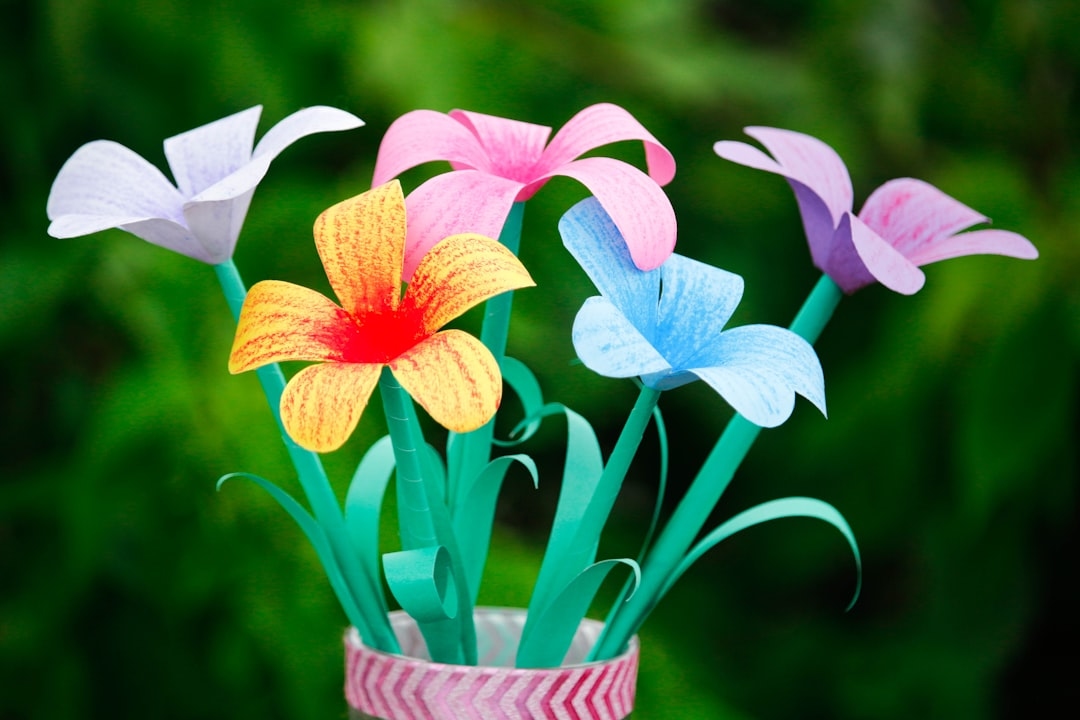
Can a bouquet made entirely from paper actually look as good as fresh flowers? With the right technique, yes — and it’ll last indefinitely without a drop of water. This guide walks you through a complete paper flower bouquet DIY from scratch, even if you’ve never folded a piece of cardstock in your life.
Why Paper Flowers Are Worth Your Time
Fresh flowers are beautiful. They’re also expensive — the average American spends around $150 on a flower arrangement for special occasions — and they wilt within 7 to 10 days. Paper flowers solve both problems. A handmade paper bouquet costs roughly $10 to $20 in materials and holds its shape for years stored in a cool, dry space.
Beyond cost, paper gives you total creative control. You choose every color, size, and petal shape. No seasonal availability issues, no browning edges, no pollen allergies.
Paper Flowers vs. Fabric Flowers: Know the Difference
Beginners often confuse paper flowers with fabric or felt flowers. They’re made differently and serve different purposes. Fabric flowers are more durable and commonly sewn into brooches, hair accessories, or home décor meant to withstand regular handling. Paper flowers, by contrast, are lighter, more delicate, and better suited for display bouquets, centerpieces, wedding backdrops, and gift presentations.
Crepe paper is the gold standard for realistic paper flowers because it stretches and holds a curve — properties that fabric can’t replicate without additional structure. Cardstock works well for geometric or origami-style blooms. Copy paper is fine for practice but tears easily and lacks the body needed for a polished result.
What You Need: Tools and Materials
You don’t need a craft room full of supplies. Start with these basics:
- Crepe paper (Italian double-sided crepe paper, 180g weight, gives the most realistic petals)
- Floral wire (22-gauge for stems; 28-gauge for delicate petal attachment)
- Floral tape (½-inch width in moss green)
- Scissors with pointed tips for precision cuts
- Hot glue gun or craft glue with a fast-dry formula
- Wire cutters
- A bone folder or pencil for shaping petals
Optional but helpful: a flower template set (available on Etsy for $3–$8) speeds up cutting significantly and ensures consistent petal shapes across your bouquet.
Paper Flower Bouquet DIY: Step-by-Step Instructions
Step 1 — Cut Your Petals
Choose a flower type to replicate. Roses, peonies, and ranunculus are beginner-friendly because their petals are rounded and forgiving. Cut 15 to 20 petals per flower in graduating sizes: 5 small (1.5 inches), 7 medium (2.5 inches), and 5 to 8 large (3.5 inches). Stack 4 to 5 layers of crepe paper before cutting to save time.
Step 2 — Shape the Petals
This is what separates flat, lifeless petals from ones that look three-dimensional. Hold a petal between both thumbs and gently stretch the center outward. For a cupped shape, press your thumbs into the base and pull outward simultaneously. For a ruffled edge, lightly stretch along the top curve. Work slowly — crepe paper tears if you rush.
Step 3 — Build the Flower Core
Take a 12-inch length of 22-gauge floral wire. Bend a small hook at the top. Roll a small ball of crepe paper or tissue around the hook to form the center bud — about the size of a marble. Secure with a wrap of floral tape.
Step 4 — Attach Petals in Layers
Start with the smallest petals, overlapping them around the center bud and securing each with a thin strip of floral tape or a small dot of hot glue at the base. Work outward, adding medium then large petals. Angle larger petals slightly outward as you go to create a natural open-bloom look. Each complete flower takes 15 to 25 minutes for a beginner.
Step 5 — Add Leaves and Wrap the Stem
Cut leaf shapes from green crepe paper. Back each leaf with a short length of 28-gauge wire and attach them along the stem with floral tape. Then wrap the entire stem from base of bloom to bottom of wire with floral tape, stretching it slightly as you spiral downward — this activates the tape’s self-adhesive properties.
Step 6 — Assemble the Bouquet
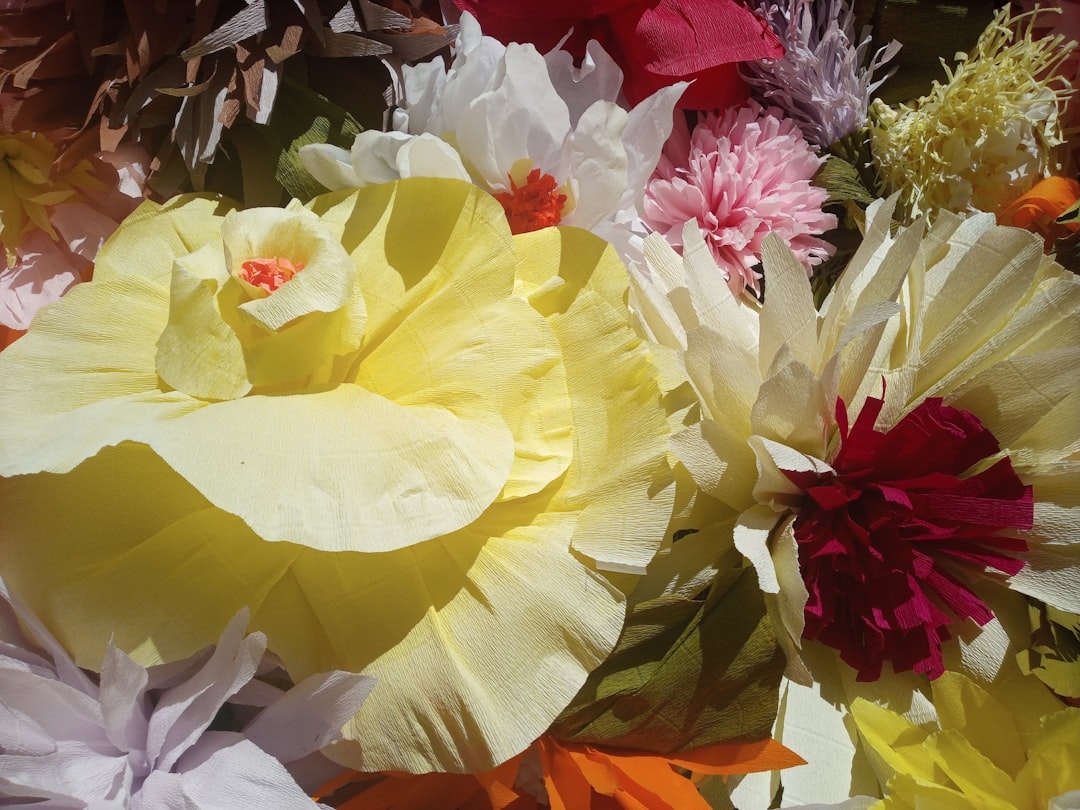
Group 5 to 9 finished flowers together, varying heights by 1 to 3 inches for a natural look. Hold them in a loose cluster, then bind the stems together about 5 inches from the bottom using floral tape or ribbon. Trim the wire stems to a uniform length with wire cutters. Finish with a ribbon wrap and a bow.
Seasonal Timing: When to Make (and Gift) Paper Bouquets
Paper flowers have no growing season, but demand for handmade bouquets peaks at predictable times. Plan ahead if you’re making them as gifts:
- January–February: Valentine’s Day demand peaks; start at least 3 weeks out for a multi-flower bouquet
- April–May: Mother’s Day and spring weddings; pastel crepe paper in blush, lavender, and soft yellow sells out fast at craft stores
- September–October: Fall weddings and harvest decor; burnt orange, burgundy, and ivory are the go-to palette
- November–December: Holiday gifting; deep red, white, and forest green paper bouquets make striking alternatives to poinsettias
Stock up on supplies at least a month before these windows. Michael’s and Hobby Lobby routinely run 40–50% off coupons on floral supplies that can cut your material cost significantly.
Practical Tips for Better Results
- Store finished flowers in a box away from direct sunlight — UV exposure fades crepe paper within a few months of continuous light exposure.
- Use a light misting of matte finish spray (like Krylon Crystal Clear Matte) to add subtle sheen and minor moisture resistance.
- If a petal tears, don’t discard the flower — layer an additional petal over the damage and glue it in place. Most repairs are invisible once assembled.
- Work in batches: cut all petals first, shape them second, assemble third. Assembly-line production cuts your time per flower by about 30%.
Frequently Asked Questions
What is the best paper for making a flower bouquet?
Italian double-sided crepe paper at 180g weight produces the most realistic results because it stretches, holds curves, and has a natural texture. For geometric or origami-style flowers, use 80 to 100 lb cardstock.
How long does it take to make a paper flower bouquet?
A beginner can complete a single paper flower in 20 to 30 minutes. A full bouquet of 7 to 9 flowers takes approximately 3 to 4 hours, including assembly time.
How do I make paper flowers look realistic?
Shaping is the key step. Stretch and cup each petal individually before assembling. Varying petal sizes within a single bloom and angling outer petals outward both contribute significantly to a natural appearance.
Can paper flower bouquets get wet?
Standard crepe paper is not waterproof. Light humidity is tolerable, but direct moisture will cause blooms to lose their shape. A coat of matte sealant spray adds minor protection for display use.
How do you keep a paper flower bouquet from falling apart?
Use a combination of floral tape and a small dot of hot glue at the base of each petal. Floral tape alone holds well short-term, but glue at key stress points prevents loosening over months of display.
Take It Further: Your Next Paper Flower Project
Once you’ve completed your first bouquet, the techniques scale directly to larger projects: full wedding centerpieces, paper flower walls, and oversized statement blooms for event backdrops. The same core skills — cutting, shaping, layering, and taping — apply at any size. Many crafters who start with a single DIY bouquet go on to sell their work on Etsy, where handmade paper flower bouquets regularly list between $35 and $120 depending on size and complexity. Your first bouquet is just the beginning of what’s possible with a roll of crepe paper and a little patience.